"Fractional sales leader" describes a contract, not a job. The contract says two or three days a week. The job is the same one a full-time sales director does for a team of two to ten, minus the days spent in meetings that don't move a deal. Here's what that looks like inside an ERP partner — the Acumatica and Wiise resellers we mostly work with — because the specifics matter more than the label.
The weekly rhythm
Pipeline review. One meeting, every week, every deal above a threshold. Not a status update — an inspection. Four questions per opportunity: do we have access to the person who can say yes; has the timeline been tested against something real; has the prospect agreed what this is worth to them; is there a booked next step. A deal that fails two of those isn't forecast, whatever the CRM stage says.
One-on-ones. Each BDM, each week, on their deals and their skills. This is where coaching happens: the discovery call that went nowhere, the demo that turned into a product tour, the proposal that should never have gone out. Reps get better in these meetings or not at all.
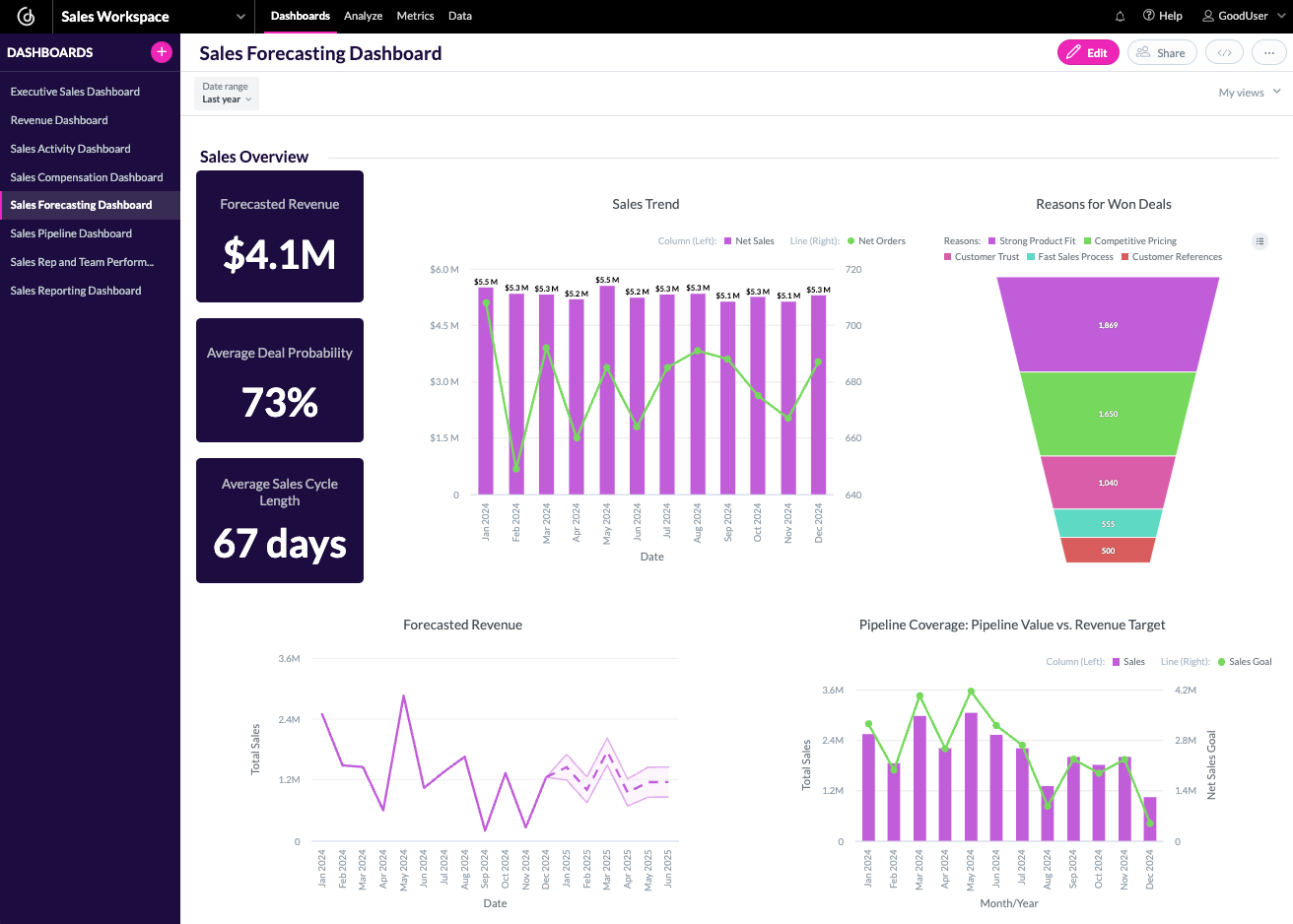
Forecast. A number leadership can plan on, built from stage-exit evidence rather than close dates set to the end of the quarter. In an ERP partner the forecast also drives implementation resourcing, so a hopeful forecast costs twice — once in revenue, once in idle consultants.
The deal work
Qualification that fits partner deals. ERP prospects are expensive to pursue: discovery, scoping, demo, proposal, often a second demo. A fractional leader installs a standard for what gets that investment. For us it includes a threshold — single-entity businesses under about $5M revenue rarely have enough pain to justify the platform — and a rule that vendor-sourced leads get qualified like any other, because volume from the vendor is not the same as fit.
Demo structure. The single biggest leak in ERP sales is the demo that goes well and leads nowhere. A leader rebuilds the demo around the prospect's stated problem, proves the fix, and ends with a committed next step. Then sits in on demos until the team runs it that way without being asked.
Pre-proposal review. No pricing goes out until the deal has been checked against the four questions above and the value has been agreed in the prospect's own numbers. Proposals that lead with cost get compared on cost.
Live deal strategy. The deals that matter — anything from $20K to $3M — get worked together: who's really driving it, who can veto it, what the cost of doing nothing is, what the mutual close plan looks like. The founder stops being the only person who can close.
The system
CRM stage gates. Stages get exit criteria the system enforces — you can't move a deal to Proposal without a named decision-maker and an agreed value, for instance. The forecast stops depending on who's optimistic that week, and leadership can audit the pipeline without asking anyone.
Playbooks in the CRM, not in a binder. Qualification criteria, discovery questions, demo structure, proposal checklist — attached to the stages where they're used. This is the part that survives a rep leaving, and the part most sales consultants never build because it's unglamorous.
Marketing held to the same number. Where the partner has a marketing function, or works with one, the leader makes sure it's measured on what converts rather than what clicks. In our engagements that's often done with our partner Full Signal on the demand side; either way, the principle is one pipeline, one number.
What's left behind
The test of fractional leadership is what the team keeps when the leader steps back. It should be: a weekly rhythm they run themselves, a demo they can teach a new hire, stage gates the CRM enforces, a forecast the owner trusts, and a founder who isn't in every deal. If what's left is a strategy document and a fond memory, the engagement was advice with a better title.
Where we fit
That's the job we do for ERP partners, software vendors and systems integrators, through three engagements: a fixed-length GTM Diagnostic, Embedded Sales Leadership on a retainer, and a Deal Strategy Lab for founders still running sales themselves. See how we work together →