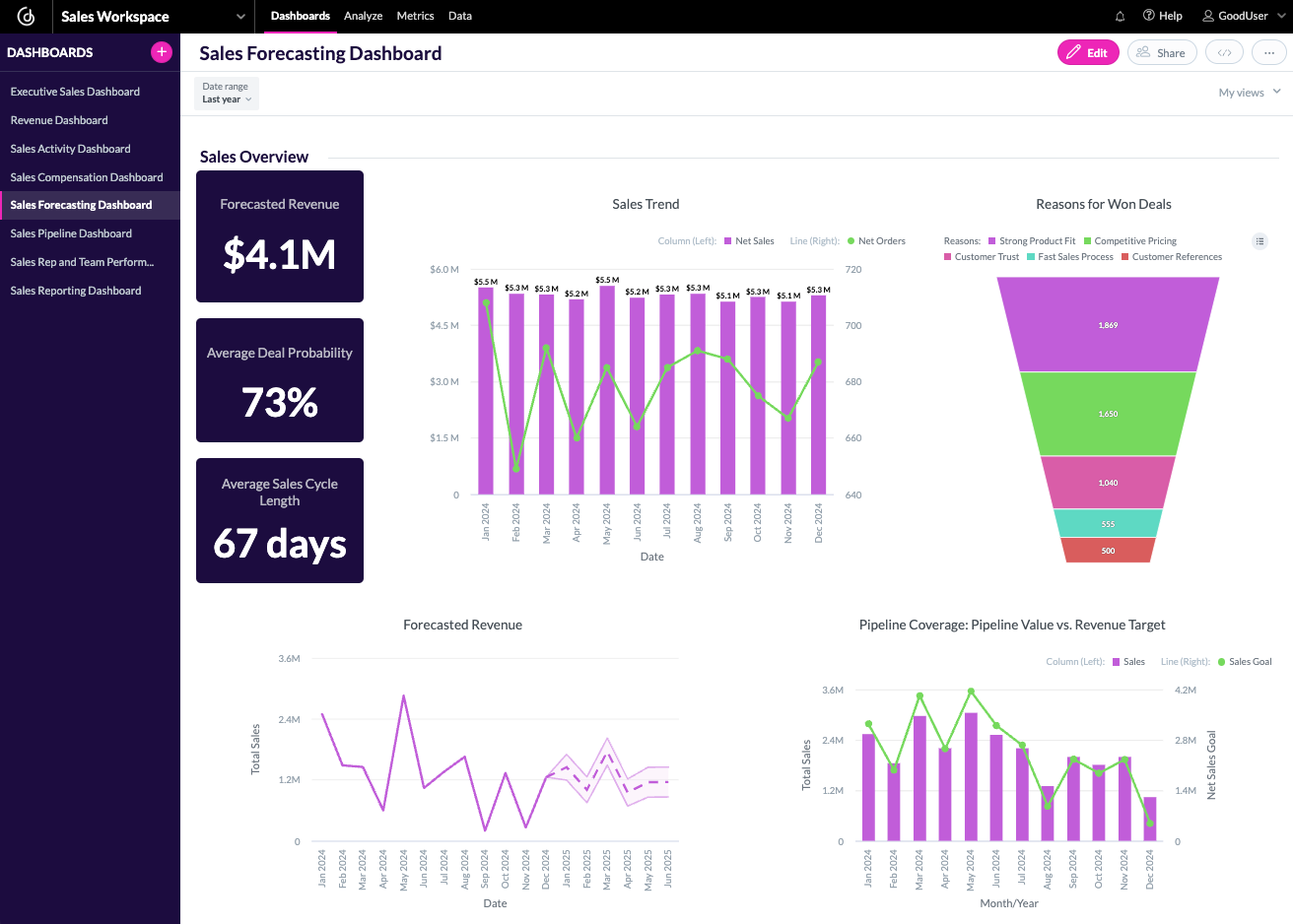
Most sales forecasts are fiction. Not because anyone is lying — reps believe their numbers, and leaders want to — but because the thing being forecast was never defined. A forecast is a prediction about deals, and if nobody has said what a real deal looks like, the prediction is a mood.
In a partner or software business the cost is doubled. A hopeful forecast misses revenue, and it also drives implementation resourcing, hiring and cash-flow decisions that were made on numbers that were never going to land.
What a forecast is actually made of
Strip it back and a forecast is three things: which deals are in it, what probability each carries, and when each will close. Most forecasts get all three from the same unreliable source — the rep's stage selection and gut feel — and then add them up with great precision.
The fix is to source each from evidence instead.
Which deals. A deal belongs in the forecast when it passes four tests: access to the person who can say yes, a timeline tested against something real in the prospect's business, a value the prospect has agreed in their own numbers, and a booked next step. Fail two and it's pipeline, not forecast, whatever the CRM stage says.
What probability. Not a percentage attached to a stage name. A category the whole team uses the same way: Commit (all four tests passed, decision date agreed), Best Case (three of four, the gap is known and being worked), Pipeline (everything else). Three buckets, written definitions, no exceptions. Precision you can't defend is worse than a range you can.
When it closes. A close date is only real if it's tied to a prospect event — a board meeting, a go-live window, the end of a contract. A date set to the last day of the quarter because that's when the quarter ends is a placeholder, and the forecast should treat it as one.
Why it drifts, and how to stop it
Forecasts drift because stages drift. If a deal can reach Proposal because someone asked for pricing, Proposal means nothing and the forecast built on it means nothing. Stage-exit criteria the CRM enforces — a required decision-maker, an agreed value, a tested timeline before the stage can change — fix this at the source. The data stops needing to be policed because the system polices it.
The other reason is that nobody tests the forecast until the quarter's over. A weekly pipeline review that inspects every forecast deal against the four tests catches a slipping deal in week three rather than week twelve. The conversation changes from "it's still looking good" to "what's the evidence it closes this month, and what changed since last week?"
What accurate looks like
We don't aim for perfection. A mid-market B2B sales team running this properly should forecast within about ±10% over a quarter, and the owner should be able to see which deals carry the risk. Compared with the 80%-called, 25%-landed pattern most founders have lived with, that's the difference between a number you can plan on and a number you brace for.
The first quarter is uncomfortable, because the forecast drops when the truth goes in. Every owner we've done this with has said the same thing afterwards: they'd rather know in week one than in week thirteen.
Where to start
Define the four tests in writing. Rebuild the stages with exit criteria the CRM enforces. Replace stage percentages with three categories. Run the weekly review against the tests. Then compare the forecast to the actual at quarter end and talk about the gap, deal by deal — that conversation is where the team learns what a real deal looks like.
If you want to know where your current pipeline stands first, Why Pipelines Lie covers the five faults that inflate it. Forecast discipline is one of the first things we install in Embedded Sales Leadership, because everything else depends on the number being real.