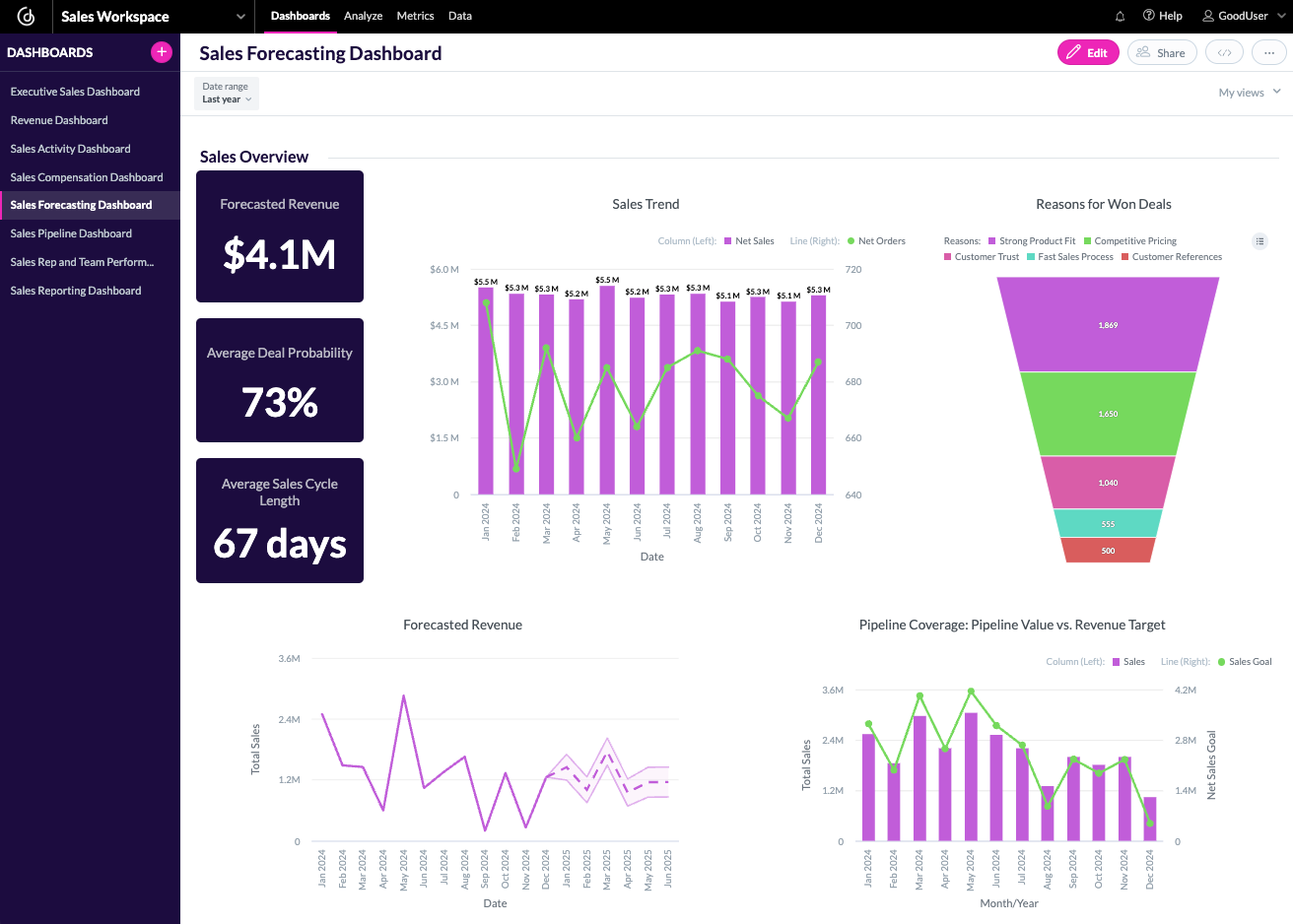
Ask a founder how the pipeline is managed and they'll usually describe a dashboard. Ask the reps and they'll describe a meeting they'd rather not be in. The dashboard isn't pipeline management; the meeting is. Run badly, it's a weekly recital of status updates. Run well, it's the single most effective sales-management tool a business of two to ten reps has.
Here's how we run it inside ERP partner, software vendor and SI sales teams.
Every week, every deal above a threshold
One meeting, same time, same day. Every open opportunity above a size threshold (set it so the meeting covers the deals that matter and takes under an hour). Smaller deals get handled in one-on-ones.
The owner or sales leader runs it. The reps present. The CRM is on screen, and the rule is that if it isn't in the CRM it didn't happen — not to punish the rep but because a review of the rep's memory isn't a review of the pipeline.
Four questions per deal
Status updates are what you get when the leader asks "how's it going?". Inspection is what you get when the leader asks the same four questions about every deal, every week:
- Do we have access to the person who can say yes? Not the champion, not the evaluator. The decision-maker. If not, what's the plan to get there?
- Has the timeline been tested? Against what — a go-live window, a contract end, a board date? Or is it the end of the quarter because that's when the quarter ends?
- Has the prospect agreed what this is worth? In their numbers, not ours. What's the cost of doing nothing that they've acknowledged?
- Is there a booked next step? Date, attendees, purpose. "Following up" isn't a next step.
A deal that fails two of those isn't forecast, whatever the stage says. Saying so out loud, every week, is how a team learns the standard.
What the leader is listening for
The questions are about the deal; the coaching is about the rep. The review surfaces the same patterns week after week: the rep who never gets past the operations lead, the rep whose timelines are always "this quarter", the rep whose demos go well and then go quiet. Those are the one-on-one agenda. The review diagnoses; the one-on-one fixes.
Coverage, and the honesty that comes with it
A rough rule: three to four times the target in forecast-quality pipeline. If the quarterly number is $300K, you want $900K to $1.2M of deals that pass most of the four tests. Not $1.2M of CRM entries — most teams have that and it means nothing. Coverage only tells you something once the pipeline has been cleaned, which is why the review and the clean-out go together.
Close out what isn't moving
The hardest discipline: a deal with no movement for ninety days, no evidence against the four tests, no access to power, gets closed-lost with a reason. Not parked, not "nurture". Closed. It can come back. Meanwhile the pipeline the business plans on is the one it actually has, and the rep's attention goes to deals that can close.
Owners resist this because the number drops. It drops to the truth. Every owner we've done it with has preferred the truth within a fortnight.
The mistakes that turn it into a status meeting
Letting reps narrate. "I spoke to them Tuesday, they're keen, I'll follow up Friday." The leader's job is to interrupt with question one.
Skipping it when it's busy. The weeks you skip are the weeks deals slip.
Running it off a spreadsheet. If the review happens outside the CRM, the CRM becomes fiction and the forecast with it.
Making it the forecast meeting as well. The review inspects deals. The forecast falls out of it. Trying to do both at once produces negotiation, not inspection.
No consequence. If a deal can fail the four tests for a month and stay in Commit, the questions are theatre.
What changes
After a couple of months the meeting gets shorter, because reps start answering the four questions before they're asked. The forecast tightens, because it's built from evidence that's been tested weekly. And the founder stops being the only person who knows which deals are real.
The review depends on stages that mean something — Why Pipelines Lie covers how to fix those — and it produces the forecast described in Forecasting You Can Plan the Business On. Running this review, week in week out, is the core of what we do in Embedded Sales Leadership.